- Verizon Htc Windows 8x Phone
- Htc Windows Phone 8x
- Htc Windows Phone 8x Update
- Htc Windows Phone 8x Apps
User Manual (PDF) HTC's Site. Search Device Learning Center. Getting started Available for this topic: 0 Videos 13 Tutorials. Search tutorials for your HTC Windows Phone 8X (PM23300). Additional Resources. These resources provide even more information about your phone or device. Device Software Updates. Windows Phone 8X by HTC User guide Download HTC Windows Phone 8X user manual in PDF format: HTC-WindowsPhone8X-EN CPU Speed Qualcomm® S4 1.5 GHz, Dual-core. Find the user manual you need for your cellphone and other products at ManualsOnline. Automotive; Baby Care; Car Audio & Video; Cell Phone. HTC Cell Phone 8X. HTC America Cell Phone User Manual. See Prices; HTC Cell Phone 8X. HTC America Cell Phone User Manual. HTC Cell Phone User Guide. See Prices; HTC Cell. HTC Windows Phone 8S User Manual Guide Pdf - This smartphone like HTC discharged version of the HTC 8X saving. Some cut sector performance for lower costs. But this smartphone still incorporates a pretty sensible performance against rivals such Lumia 820.
Feb 03, 2013 instruction manual for htc windows 8 phone where do I find a instruction manual for my windows 8 phone. This thread is locked. You can follow the question or vote as helpful, but you cannot reply to this thread. I have the same question (3) Subscribe Subscribe to RSS feed.
| Main display: Super LCD 16M colors 720 x 1280 px (4.30″) 342 ppi |
| Qualcomm MSM8260A 1,50 GHz [Number of cores: 2] |
| Li-Po 1800 mAh |
| Internal memory: 16 GB |
| RAM memory: 1 GB |
| 8 Mpx, 3264x2448 px |
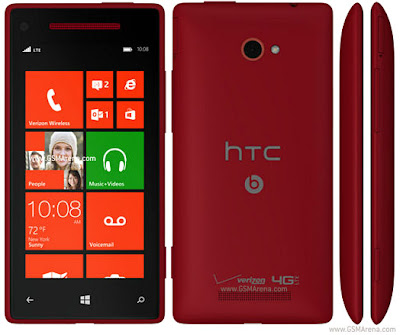
| Dimensions: | 132,35 x 66,2 x 10,12 mm |
| Weight: | 130 g |
| GSM frequencies: | 850/900/1800/1900 |
| Standard UMTS: | 850/900/1900/2100 |
| Standard battery: | Li-Po 1800 mAh |
| Internal memory: | 16 GB |
| RAM memory: | 1 GB |
| Operating system: | MS Windows Phone 8 |
| Processor: | Qualcomm MSM8260A 1,50 GHz Number of cores: 2 |
| GPU: | Adreno 225 |
| Main display: | Super LCD 16M colors 720 x 1280 px (4.30″) 342 ppi |
| Touchscreen: | Yes |
| Digital camera: | 8 Mpx, 3264x2448 px |
| Secondary camera: | 2.1 Mpx |
| Flash: | Yes |
| Video: | H.264, 1920x1080 px |
| MP3: | Yes |
| Dictionary: | Yes, T9 |
| EMS: | - |
| MMS: | Yes |
| Speakerphone: | Yes |
| Voice dial: | - |
| Call forwarding: | Yes |
| e-mail client: | Yes |
| RSS Reader: | Yes |
| IrDA: | - |
| Bluetooth: | Yes, v3.1 |
| GPRS: | Yes |
| EDGE: | Yes |
| WiFi: | Yes, v802.11 a/b/g/n |
| Hotspot WiFi: | - |
| DLNA: | - |
| WAP: | Yes, v2.0 |
| xHTML: | Yes |
| HSCSD: | - |
| HSDPA: | Yes |
| HSUPA: | Yes |
| HSPA: | Yes |
| HSPA+: | - |
| LTE: | - |
| NFC: | Yes |
| WiMAX: | - |
| USB | Yes, v2.0 |
| HDMI | - |
| GPS: | Yes |
| GLONASS: | Yes |
| Push To Talk: | - |
Verizon Htc Windows 8x Phone
| Java: | - |
| Calendar: | Yes |
| Watch: | Yes |
| Recorder: | Yes |
| Alarm: | Yes |
| Organizer: | Yes |
| Calculator: | Yes |
| Polyphony: | Yes |
Mobile terms glossary
GSM stands for Global System for Mobile Communication and is the most popular 2G mobile phone standard in the world.
GSM is used by about 80% of all mobile phones - approximately 2 billion people across more than 212 countries.
The widespread use of the GSM standard has made it easy for most mobile phone users to use their phones overseas thanks to roaming agreements between operators using the same GSM standard.
GSM - then labelled Groupe Spécial Mobile was originally conceived back in 1982 as a European standard for mobile phones. The first GSM network went live in 1992 in Finland.
GSM introduced the concept of the SIM card (Subscriber Identity Module card) - a detachable smart card that lets users swap their phone number and contacts between handset.
3G - Analog cellular phones were the first generation while digital marked the second generation.3G is loosely defined, but generally includes high data speeds, always-on data access, and greater voice capacity.
The high data speeds are possibly the most prominent feature, and certainly the most hyped. They enable such advanced features as live, streaming video.
There are several different 3G technology standards. The most prevalent is UMTS, which is based on WCDMA (the terms WCDMA and UMTS are often used interchangeably).
The GPU (Graphics Processing Unit) is a specialized circuit designed to accelerate the image output in a frame buffer intended for output to a display.
GPUs are very efficient at manipulating computer graphics and are generally more effective than general-purpose CPUs for algorithms where processing of large blocks of data is done in parallel.
Modern smartphones are equipped with advanced embedded chipsets that can do many different tasks depending on their programming. GPUs are an essential part of those chipsets and as mobile games are pushing the boundaries of their capabilities, the GPU performance is becoming increasingly important.
Bluetooth is a low-power wireless networking technology operating in the 2.4 GHz unlicensed Industrial, Scientific and Medical (ISM) band. There are two classes of Bluetooth device — Class 1 devices have higher output power and a range of about 100 meters, and Class 2 devices have lower power and a range of about 10 meters. Bluetooth enables ad hoc networking of up to eight devices (supporting voice and data). The Bluetooth Special Interest Group (SIG) was founded in 1998 by IBM, Intel, Ericsson, Nokia and Toshiba, and is supported by more than 2,500 organizations. The Bluetooth v.1.0 specification was ratified and published in 1999 and supported data rates of up to 1Mbps. Bluetooth Version 2.1, along with its enhanced data rate (EDR) specification, was ratified in March 2007, supporting data rates of up to 3 Mbps, and simplified “pairing” — the process used for securely linking one Bluetooth device to another. It also reduced power consumption, doubling the battery life of headsets and other mobile devices for which the Bluetooth radio consumes a large percentage of the power budget. Version 3.0 (“Seattle”) was adopted by the SIG in April 2009, and the specification included Wi-Fi as an alternative transport layer for large volumes of data, supporting data rates of up to 24 Mbps. The SIG also adopted “Bluetooth low energy,” a new ultra-low-power variant, previously referred to as Ultra Low Power (ULP) Bluetooth and Wibree.
GPRS stands for General Packet Radio Service and was the first popular data standard for mobile phones.
GPRS was used for WAP and MMS messages and offered modest connection speeds - typically 30-40 Kbit/s, although the theoretical maximum is 115 Kbit/s. GPRS is known as a 2.5G technology.
One of the early advantages of GPRS is that it s always on so no connection handshake is needed. It is still very popular, especially in the developing world.
The name of EDGE in full is Enhanced Data rates for GSM Evolution. This is a 2.75G technology further developed from the 2G and 2.5G technologies. Its data transmission speed is higher than that of GPRS and is closer to 3G technology.
 Wi-Fi is a WLAN (Wireless Local Area Network) technology. It provides short-range wireless high-speed data connections between mobile data devices (such as laptops, PDAs or phones) and nearby Wi-Fi access points (special hardware connected to a wired network).
 The older variant of Wi-Fi, 802.11g, is capable of providing speeds of up to 54Mbps and is backwards compatible with 802.11b (providing up to 11Mbps).
The more recent standard is called 802.11n (offering speeds of up to 150Mbps per channel or up to 600Mbps in total). It can be used in the 2.4 GHz or 5 GHz frequency bands, though a receiver needs to have dual-band antenna to operate on both.
Htc Windows Phone 8x
Universal Serial Bus (USB) is a serial bus standard to interface computer peripherals. USB is quickly replacing the need for serial and parallel ports to interface devices.HDMI